Susan Buck-Morss, Year One: A Philosophical Recounting (Cambridge, MA: MIT Press, 2021). 416pp., £28.00 hb., 978 0 26204 487 5 Philosophers of the enlightenment such as Rousseau, Kant and Hegel imagined their projects as universal in reach and scale. Whether these philosophers were writing about the social contract, the foundations of moral law or the […]
Der Mensch kann nur Mensch werden durch Erziehung. — Immanuel Kant, Lectures on Pedagogy, 1803. 1 Few topics have in recent years caused more controversy in studies in the history of philosophy than the issue of Immanuel Kant’s conception of race and its significance for the universalism of his moral and political philosophy. In this […]
Enzo Traverso, Revolution: An Intellectual History (London: Verso, 2021). 480 pp., £25.00 hb., 978 1 83976 333 5 The second volume of Peter Weiss’s epic historical novel The Aesthetics of Resistance opens in Paris in 1938. Recently defeated international brigade fighters in the Spanish Civil War, the unnamed narrator and his dejected comrades have taken […]
Avery F. Gordon, The Hawthorn Archive: Letters from the Utopian Margins (New York: Fordham University Press, 2018). 472pp., £87.00 hb., £33.00 pb., 978 0 82327 631 8 hb., 978 0 82327 632 5 pb. In discussing with Avery F. Gordon his video installation, The Beginning. Living Figures Dying (2013), a project focused ‘on the relationship […]
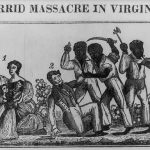
Christopher Tomlins, In the Matter of Nat Turner: A Speculative History (Princeton: Princeton University Press, 2020). 376pp., £25.00 hb., 978 0 69119 866 8 Christopher Tomlins is not the first historian to have focused on the Nat Turner rebellion. In 1831, the slave Nat Turner led a group of blacks in an insurrection in St. […]
Rachel Douglas, Making The Black Jacobins: C. L. R. James and the Drama of History (Durham, NC: Duke University Press, 2019). 320pp., £83.00 hb., £20.99 pb., 978 1 47800 427 1 hb., 978 1 47800 487 5 pb. In the same way that there are poets’ poets and communists’ communists, Rachel Douglas is a C.L.R. […]
Johan F. Hartle: I want to discuss the possibilities of Critical Theory that you and Alexander Kluge develop in your collective project. To that end, I would like to ask you to reconstruct a few points from your biography. Let’s start off by having you describe your path to the Institute for Social Research in […]
Arendt’s love affair with Heidegger and its aftermath, and Adorno’s love of the high life, than we learn about their philosophies and the ways in which these might emerge out of experience of and reflection on Nazi domination. (Sherratt has written elsewhere on Adorno’s philosophy, in a study titled Adorno’s Positive Dialectic, 2002.) The opponents […]
Isn’t it an affront to Goethe to make a film of Faust, and isn’t there a world of difference between the poem Faust and the film Faust? Yes, certainly. But, again, isn’t there a whole world of difference between a bad film of Faust and a good one? Walter Benjamin, Arcades Project (N1a, 4)Whilst the […]
Where Marx is closest to the spirit of deconstruction is, arguably, in these formulaic gestures towards a society that had so far transcended existing actuality that its conditions of realization could no longer be conceptualized. Marx is spectral Marx in his refusal to envision communism in his envisaging of it, in his anti-utopian utopianism. Now, […]
Naming, myth and history Berlin after the Wall Gordon Finlayson Whoever believe that certain things are of no concern to them frequently deceive themselves, e.g. philosophers about history. Immanuel Kant, Reflections on Logic What has happened to history since the Berlin Wall fell? If Susan Buck-Morss is to be believed, fashion parades in its ruins; […]
The Politics of Time Peter Osborne The simple possibility that things might proceed otherwise … is sufficient to change the whole experience of practice and, by the same token, its logic. Pierre Bourdieu, The Logic of Practice The simple possibility that things might proceed otherwise is something in which there is depressingly little belief at […]
Fashion in Ruins History after the Cold War Susan Buck-Morss On Pariser Platz at the Gate’s east side, vendors sell souvenirs of the fallen Wall and mementos of the fallen regime. To the north, above the tree-line, the German flag flies over the ruins of the Reichstag that was burned in 1933 and bombed during […]
Nietzsche: The Subject of Morality Ross Poole It is to be inferred that there exist countless dark bodies close to the sun – such as we shall never see. This is, between ourselves, a parable; and a moral psychologist reads the whole starry script only as a parable and signlanguage by means of which many […]
EDITORIAL THE WEIGHT OF HISTORY You will certainly have heard by now that 1989 is the bicentenary of the French Revolution. In many quarters there will be events – be they sentimental, thought-provoking, spectacular or brash – to mark the occasion. All in all, in this issue you will fmd various pieces referring to the […]
Who Made the French Revolution?: An Essay on Current Historiography Noel Parker In his most approachable work, The Coming of the French Revoiution,2 Georges Letebvre, the authoritative marxist historian of the Revolution, sub-divided it thus: an aristocratic revolution (the reform effort by the monarchy) which failed; a bourgeois revolution which succeeded, with the help of […]
Lyotard and the Politics of Antifou ndational ism Stuart Sim 11 An increasingly important trend in recent philosophy has been antifoundationalism: the rejection of the search for 10gical1y-consistent, self-evidently true “grounds” for philosophical discourse, and the substitution of ad hoc tactical manoeuvres as justification for what are quite often eccentric lines of argument. Antifoundationalism is […]
Locke also has a principle – we should notice which limits the volume of goods that may be accumulated to that quantity which can be properly used or disposed of. A person ‘offended against the Law of Nature’ if he allowed the things in his possession to spoil or perish ‘without their due use’ (25). […]
PRISON TaLK: an interview with Miehel Foueault Introduction This interview dates from June 1975 when Michel Foucault published Surveiller et Punir (Surveillance and punishment), subtitled: Naissance ‘de la Prison (Birth of the Prison). This book can be seen as forming a trilogy with Foucault’s Madness and Civilisation (1961) and Birth of the Clinic (1963); each […]
contradictory claims r~ard1ng freedOm and necessity in the same work. An alternative approach to the determinism debate is the one adopted in Alienation which underscores the elastic meaninq of ‘ciCuse’ and ‘detelllLine’, but this doesn’t bring out adequately the reasohs for such variations. If Marx’s materialist conception of history, then, deals with the determining role […]