Posts tagged ‘Immanuel Kant’

Spontaneous generation

The fantasy of the birth of concepts in Kant’s Critique of Pure Reason


by / RP 179 (May/Jun 2013)

In the second edition of the Critique of Pure Reason, at the end of the transcendental deduction of the categories, Kant distinguishes the doctrine of transcendental idealism from competing theories of knowledge – or, more specifically, theories of the relation between concepts and experience – by characterizing them in terms of various theories of biological [...]


Also Sprach Zapata

Philosophy and resistance


by / RP 171 (Jan/Feb 2012)

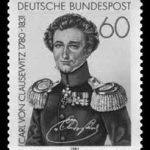
Each strives by physical force to compel the other to submit to his will: each endeavours to throw hisadversary, and thus render him incapable of further resistance. (Clausewitz, On War, 1832) Receive our truth in your dancing heart. Zapatalives, also and for always in these lands. (Clandestine Indigenous Revolutionary Committee ZNLA, ‘Votan-Zapata or Five Hundred Years [...]


Sex: a transdisciplinary concept

From structure to rhizome: transdisciplinarity in French thought (1)


by / RP 165 (Jan/Feb 2011)

What is sex? Some feminists have harboured suspicions about this form of question, given its philosophical (or ‘metaphysical’1) pedigree. But philosophy no longer has the disciplinary monopoly on it. Indeed, with regard to sex, the more interesting task today is to pose and to attempt to answer the question from within a transdisciplinary problematic. For [...]


Imaginative mislocation

Hiroshima’s Genbaku Dome, ground zero of the twentieth century


by / RP 162 (Jul/Aug 2010)

The average Westerner … was wont to regard Japan as barbarous while she indulged in the gentle arts of peace: he calls her civilized since she began to commit wholesale slaughter on Manchurian battlefields. Kakuzo Okakura, The Book of Tea, 1906 The controversy that erupted in March over the publication of Charles Pellegrino’s account of [...]


What is – or what is not – contemporary French philosophy, today?

by / RP 161 (May/Jun 2010)

The question that serves as the title of my lecture,* the question that motivates this lecture, is sustained by a negation that is absolutely necessary to the construction of the problematic I aim here to open. For I have found no other means than the ‘labour of the negative’, in the most literal sense, to [...]


Children of postcommunism

by / RP 159 (Jan/Feb 2010)

Transitology and the infantilization of postcommunist societies (part of RP 159′s dossier on ‘The Postcommunist Condition’).


After life

De anima and unhuman politics


by / RP 155 (May/Jun 2009)

The Substance of Thought, Cornell University, NY, 10–12 April 2008

by / RP 150 (Jul/Aug 2008)

Grounding Deleuze

by / RP 148 (Mar/Apr 2008)

The absolute artwork meets the absolute commodity

by / RP 146 (Nov/Dec 2007)

An immanent transcendental

Foucault, Kant and critical philosophy


by / RP 141 (Jan/Feb 2007)

Vocabulary of European Philosophies, Part 2 (Object)

by , , and / RP 139 (Sep/Oct 2006)

Introduction Gegenstand/Objekt Dominique Pradelle Object Olivier Boulnois Res Jean-François Courtine


Vocabulary of European Philosophies, Part 1 (Subject)

by , , , and / RP 138 (Jul/Aug 2006)

Introduction From Abstraction to Wunsch: The Vocabulaire Européen des Philosophies Howard Caygill Subject Étienne Balibar, Barbara Cassin, Alain de Libera


Transcendental cinema

Deleuze, time and modernity


by / RP 130 (Mar/Apr 2005)

The reproach of abstraction

by / RP 127 (Sep/Oct 2004)

Karatani’s Marxian parallax

by / RP 127 (Sep/Oct 2004)

The sublime from Lyotard to Schiller

Two readings of Kant and their political significance


by / RP 126 (Jul/Aug 2004)

The ethics of conviction

Marxism, ontology and religion


by / RP 121 (Sep/Oct 2003)

Exchange on Hegel’s racism

by and / RP 119 (May/Jun 2003)

The aesthetics of appearing

by / RP 118 (Mar/Apr 2003)